Most testing approaches are assembled from borrowed tools and convention. SDT's was engineered from first principles — and protected by a U.S. patent. The Keyword framework separates test design from automation engineering, which is why it produces regression libraries that stay maintainable as your software grows. It's not a better version of what everyone else does. It's a different approach entirely. And the downstream effect of that difference is measurable: organizations that implement SDT's Keyword framework consistently report faster release cycles, lower maintenance overhead, and regression coverage their teams can actually trust.
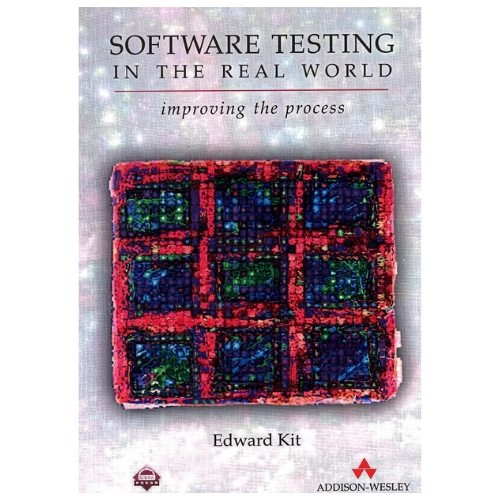
The only patented Keyword-Driven Test Design and Automation methodology in the industry. Engineered from first principles by SDT founder Edward Kit — author of Software Testing in the Real World.
Built on the principles in Edward Kit's landmark book, SDT's methodology flows from proven best practices into functional testing and automated keyword testing — applied across every technology and every industry your enterprise operates in.
Rigorous manual and automated quality assurance grounded in SDT's proven test design principles.
SDT's patented Keyword Automation Testing framework — decoupling test design from automation engineering to build regression libraries that stay healthy, maintainable, and accurate across every release.
Strategic advisory services to transform your testing practice — from test strategy through quality assurance and risk reduction.
Most testing approaches are assembled from borrowed tools and convention. SDT's was engineered from first principles — and protected by a U.S. patent.
SDT's patented Keyword-Driven Architecture separates test design from test implementation. Test Designers write test cases in plain business language using Keywords — modular, reusable components that describe what to do, not how to do it. Automation Engineers implement the underlying code once. The result is a test suite that anyone on the team can contribute to and maintain.
Keywords describe business actions — "Submit Order," "Validate User Login," "Generate Report" — not technical steps. Non-technical team members with domain expertise can design and review test cases without relying on engineers, dramatically expanding who contributes to quality.
SDT's open architecture integrates with the tools you already use — Selenium, Robot Framework, JMeter, Mercury Interactive, Test Director, and modern CI/CD platforms. Your existing investments are preserved, not replaced. When better tools emerge, you adopt them without rebuilding your test library.
SDT doesn't create dependency. Every engagement includes knowledge transfer — mentoring, coaching, and training that enables your team to run the testing practice independently. The Keyword library you build is yours to maintain and grow.
Teams become productive with SDT's Keyword Automation methodology in just weeks. The roles-based structure means Test Designers and Automation Engineers work in parallel — designers building test cases while engineers implement Keywords simultaneously — without blocking each other or waiting on a scripting backlog.
Five Automation Engineers can support 50–100 domain knowledge testers using SDT's roles-based model — a ratio proven at enterprise scale across Fortune 500 organizations. The framework grows with your codebase without requiring proportional increases in technical headcount. And because Keywords are modular and reusable, the regression library compounds in value with every release.
Most testing frameworks solve for today's backlog. SDT's framework is designed for the life of your product.
| Capability | Script-Based Automation | Record & Playback | SDT Keyword Framework |
|---|---|---|---|
| Non-technical testers can create tests | ✕ Requires scripting | ✕ Fragile, limited | ✓ Business language |
| Maintainable across app versions | ✕ Full rewrites common | ✕ Breaks on UI change | ✓ Update one Keyword |
| Open tool architecture | ✕ Often vendor-locked | ✕ Proprietary | ✓ Any tool, any stack |
| Scales to 50–100 testers | ✕ Engineer bottleneck | ✕ Not scalable | ✓ 5 engineers → 100 testers |
| Reuse across releases | ✕ Scripts decay | ✕ Minimal reuse | ✓ ~330% ROI potential |
| Patented methodology | ✕ No | ✕ No | ✓ US 9,489,277 B2 |
A global enterprise software client needed to support over 50 domain testers with a small automation team. SDT's roles-based model delivered.
"SDT's test expertise and capabilities are world class. We rely on SDT to provide the right tools, the best people, and a proven approach to test planning, design, automation, execution, and management. SDT provides speed of deployment, shared visibility, and operational excellence that is unprecedented in the industry."
Steve Weick — VP Engineering & Product Development, ENCIRQ
Book a free discovery call to see how SDT's patented Keyword framework applies to your specific application stack, team structure, and release cadence. We'll map the methodology to your biggest testing challenges.